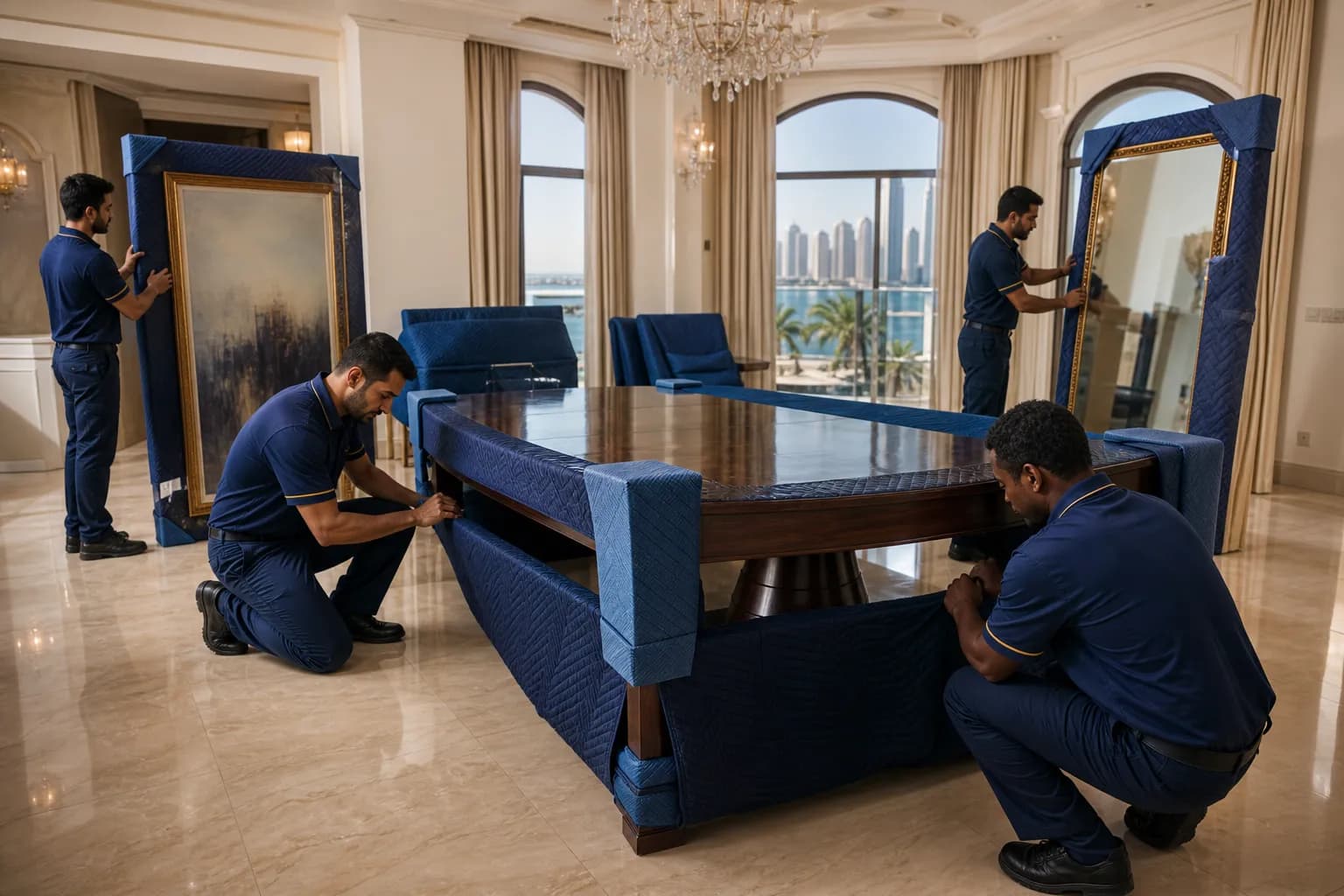
Luxury furniture is not one material category. A lacquered cabinet, upholstered sofa, marble table and antique chair react differently to pressure, moisture, adhesive and dismantling. The preparation method should follow the item’s construction and condition rather than its purchase price alone.
Document condition and construction
Photograph all sides in useful light and note existing scratches, movement, repairs or loose parts. Identify removable shelves, glass, cushions and hardware. Manufacturer information can be valuable for complex modular furniture.
Tell the mover when an item is antique, custom, exceptionally heavy or unusually valuable. Insurance and appraisal questions should be addressed before transport, not after a concern occurs.
- Photograph condition
- Identify materials
- Disclose repairs and weak joints
- Keep manufacturer details
Measure the complete route
Check furniture dimensions against doors, stairs, turns, lifts if any, gates and the destination room. A wide villa entrance may still lead to a narrow landing. Determine whether legs, doors or tops are designed to separate.
Do not force glued or unstable furniture apart. When ordinary dismantling is unsuitable, specialist lifting or another access solution may be required.
- Measure item and route
- Check both properties
- Remove only designed components
- Avoid improvised balcony lifting
Use clean layers for the actual surface
Direct contact materials should be clean and compatible with the finish. Upholstery needs protection from dirt and abrasion without trapping harmful moisture. Glass and stone require stable edge support, while polished wood should not receive adhesive directly.
Blankets, corner protection and stretch materials each serve different purposes. More wrapping is not always better if it creates pressure on delicate projections or hides unsafe handholds.
- Keep adhesive away from finished surfaces
- Protect corners and projections
- Maintain safe carrying points
- Keep items dry
Control loading and destination placement
Heavy furniture needs a stable position and should not bear unsuitable stacked weight. Components and hardware must remain associated with the item. The vehicle plan should reduce movement during transport.
At delivery, decide placement before reassembly. Inspect the furniture and test ordinary operation where practical. Wall fixing, electrical connection and specialist calibration are separate tasks unless agreed.
- Use stable vehicle placement
- Keep parts together
- Direct furniture before boxes
- Inspect before normal use