How the service works
A clear scope for a controlled villa move
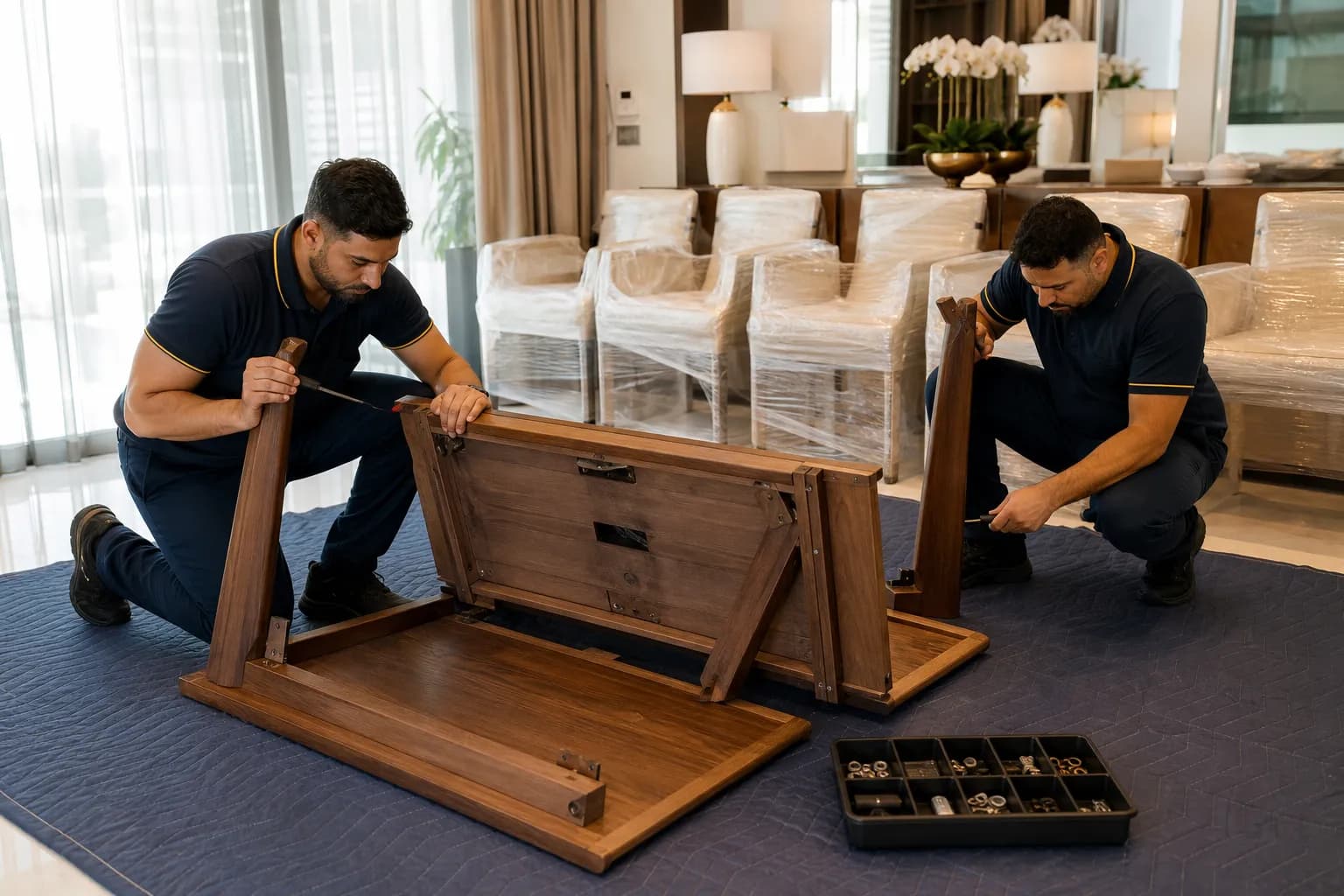
Furniture should only be dismantled when the design, access or transport plan requires it. Our team identifies suitable pieces during the survey, protects surrounding floors and surfaces, organizes fixings and reassembles agreed items at the destination. Specialist, antique, electrical or built-in furniture may require its original supplier or another qualified trade.
Assess the item before reaching for tools
The first question is whether dismantling is necessary and appropriate. We compare the furniture dimensions with doors, stairs, turns, gates and vehicle access. Modular beds, tables and standard wardrobes may be designed to separate, while glued, antique, stone-topped or heavily modified items can be unsuitable for ordinary dismantling. Customers should disclose known repairs, weaknesses and missing parts because movement can expose existing problems.
Protect the property around the work area
A villa move involves more than protecting the furniture itself. Floors, wall corners, doors and nearby items need a clear working zone. Small children and pets must stay away from tools, components and open fixings. The team removes loose contents before beginning and positions protective material where practical. The household should ensure that water, electricity or built-in connections have been safely disconnected by an appropriate provider when required.
Keep parts and fixings connected to the correct piece
Hinges, bolts, shelf supports and brackets can look identical once several items have been dismantled. We group hardware by item and protect removable components from scratching or loss. Shelves, glass inserts and drawers may travel separately when that is safer. The inventory or labeling system identifies which room will receive the furniture so the unloading sequence supports reassembly rather than burying essential parts beneath boxes.
Recognize furniture that needs a specialist
Pool tables, fitted kitchens, complex entertainment systems, motorized furniture, safes, chandeliers, pianos, large aquariums and custom joinery can require specialist assessment. Ordinary moving tools and methods may not be suitable. We would rather identify that limitation before quoting than improvise on moving day. The customer may need the manufacturer, installer or a qualified technician to prepare and recommission such items.
Check stability after reassembly
Reassembly restores the agreed components, but the customer should inspect the item before normal use. Doors and drawers should operate reasonably, connections should be checked, and visible concerns should be raised while the team is present. Wall fixing, plumbing, electrical connection and calibration are separate trades unless explicitly included. Positioning decisions should be made before heavy furniture is fully rebuilt so unnecessary movement is avoided.