How the service works
A clear scope for a controlled villa move
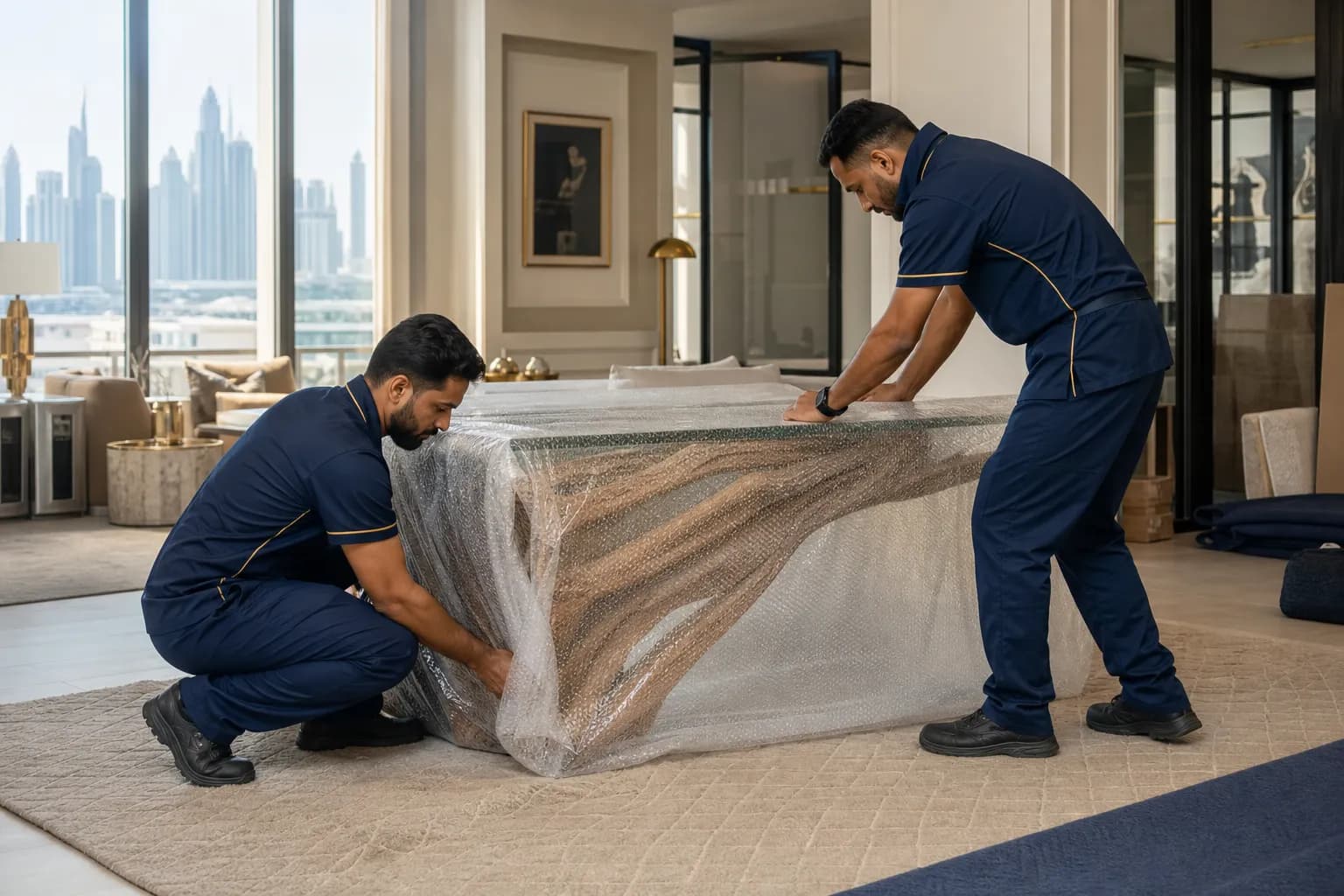
Fragile and premium belongings need more than a generic fragile sticker. We identify the item, dimensions, material, condition, value considerations and access route before selecting a preparation method. Some objects can be handled within a household move; others require custom crating, specialist lifting, climate controls or the involvement of an art handler, technician or manufacturer.
Tell the mover what the item is, not only that it is fragile
A framed print, an oil painting, a stone sculpture and a glass display cabinet have different handling needs. Photographs, measurements and a description of materials help determine whether standard protection is suitable. Existing chips, cracks, loose joints or repairs should be documented. If an item has exceptional financial, sentimental or cultural value, the customer should discuss insurance and professional appraisal before it enters the moving scope.
Prepare artwork, mirrors and decorative glass deliberately
Glass surfaces benefit from clean protection, stable edges and an upright handling plan where appropriate. Artwork may need acid-free materials, corner protection or a custom case depending on the medium and journey. Adhesive should never be applied directly to a valuable surface. Large pieces also require an access check: the route from wall to vehicle and from vehicle to destination must be wide enough and free from avoidable obstacles.
Separate owner-carried valuables
Small jewellery, cash, watches, passports, confidential files and irreplaceable personal objects should remain under the customer’s control. Their size makes them easy to misplace within a large packing operation, and ordinary household moving arrangements may exclude them. Create a clearly separated owner-carried group before packers arrive and keep it in a secure place that will not be mistaken for moving inventory.
Use the right specialist when ordinary moving is not enough
Pianos, safes, chandeliers, large stone pieces, complex aquariums, temperature-sensitive collections and museum-grade artwork can need specialist equipment or environmental conditions. We assess whether the request fits our normal capability. If it does not, the safe answer is to involve a qualified specialist rather than hide the limitation. Any third-party preparation and installation should be scheduled around the main moving plan.
Check condition at collection and delivery
Visible condition should be noted before packing, especially where an item already has age-related marks or repaired areas. At delivery, the customer should inspect the exterior protection and the item as soon as practical. Installation, wall hanging, calibration and connection are separate from transport unless written into the scope. Keeping photographs and documentation together makes any genuine concern easier to review promptly.